Turkish food as an investment theme
A döner meal sold in Istanbul creates revenue for more than the restaurant serving it. Meat suppliers, bakeries, packaging manufacturers, delivery operators and landlords may all receive part of the customer’s spending. A packet of Turkish dried figs sold abroad supports another set of businesses, from growers and processors to exporters and overseas distributors. Investing in Turkish food starts with identifying which business receives the revenue and how much it retains.
The cuisine gives the theme a recognisable commercial identity. Döner, pide, baklava, yoghurt, olives and other familiar products can support restaurant formats, packaged brands and export businesses. Their popularity creates potential demand. The investment question concerns whether that demand produces repeat purchases, dependable margins and cash available to owners after the business has paid its operating and investment costs.
The Turkish food industry is broader than traditional cuisine. It includes staples, dairy, confectionery, frozen products, beverages, agricultural processing and grocery distribution. Some businesses sell mainly to Turkish households. Others supply international buyers or operate across several countries. A company associated with Türkiye can therefore offer very different exposure from a restaurant selling Turkish dishes in Britain.
This distinction helps define the investment before choosing a security. The investor might want exposure to domestic consumer spending, food exports, an established brand, restaurant expansion or the infrastructure supporting food distribution. Each involves different customers, cost pressures and capital requirements. The word “food” does not make their earnings equally defensive or their shares equally attractive.
Company examples below illustrate business models rather than purchase recommendations. References to reported financial results identify the relevant year. Numerical operating and valuation scenarios are hypothetical. An investment’s eventual return depends on the price paid, the cash generated and the currency in which the investor measures that return.
For an investor with basic market knowledge, the useful starting point is the relationship between a product and its economic owner. Familiarity with a meal or brand can help explain demand. Financial statements, contracts and operating records establish whether an investor can participate in the profits that follow.
Where the supply chain creates value
Agricultural production sits at the beginning of many Turkish food businesses. Fruit, nuts, grain, vegetables, milk and livestock become inputs for manufacturers and restaurants. Türkiye’s Investment Office identifies dried fruit, hazelnuts and flour among the country’s established agricultural export activities. These categories connect domestic production and processing capacity to customers beyond the local consumer market.
Owning agricultural production creates exposure to yields, water, weather, biological losses and selling prices. Revenue can change sharply even when the land and equipment remain unchanged. A harvest shortfall can leave a grower with fewer units to sell while certain operating costs remain payable. An investor needs several production seasons to distinguish normal variability from a structurally weak operation.
Processing changes the economics. A business buying fruit, sorting it, drying it and packaging it sells a product with a different shelf life and commercial use. Its return depends on procurement, processing yields, factory utilisation and customer contracts. A processor can earn money without owning orchards, but its supply costs and availability remain connected to agricultural conditions.
Manufacturers producing biscuits, yoghurt or prepared meals add formulation, branding and distribution. A recognisable product may support repeat purchases and some pricing power. That advantage has to exceed the expense of marketing, retailer promotions and maintaining product quality. A brand with strong recognition can still produce poor returns if distribution costs absorb the value customers are willing to pay.
Retailers earn from sourcing and selling a basket of products. Their advantage may come from purchasing scale, convenient locations, stock turnover or an inexpensive operating format. A retailer does not need to manufacture every item it sells. It needs enough gross profit across the basket to cover stores, logistics, staff, losses and the cost of maintaining its network.
A grocery retailer may collect cash from customers before paying suppliers. That can reduce the amount of money tied up in operations. The benefit depends on stable payment terms and stock turnover. If suppliers require faster payment or unsold inventory accumulates, the same business can suddenly need more funding.
Restaurants perform another conversion. They turn ingredients, labour and premises into a meal and service. Customers pay for preparation, convenience and location as well as the food itself. A restaurant’s economics therefore depend on throughput and utilisation. A popular dish cannot compensate indefinitely for an expensive lease or a kitchen that handles too few orders during its busiest hours.
Supporting businesses can offer exposure to food consumption without owning a consumer brand. Packaging, refrigeration, warehousing and distribution are examples. Their investment appeal depends on contract terms, equipment utilisation and the reliability of customers’ payments. A supplier serving several manufacturers may face less dependence on one product, but it can still be exposed to the same national economy.
Vertical integration brings several stages under common control. It may improve coordination, purchasing and traceability, while requiring more capital and management capacity. The investor must establish which assets the legal entity actually owns. A listed restaurant company sourcing from another company in the same corporate group does not automatically give its shareholders ownership of that supplier’s profits.
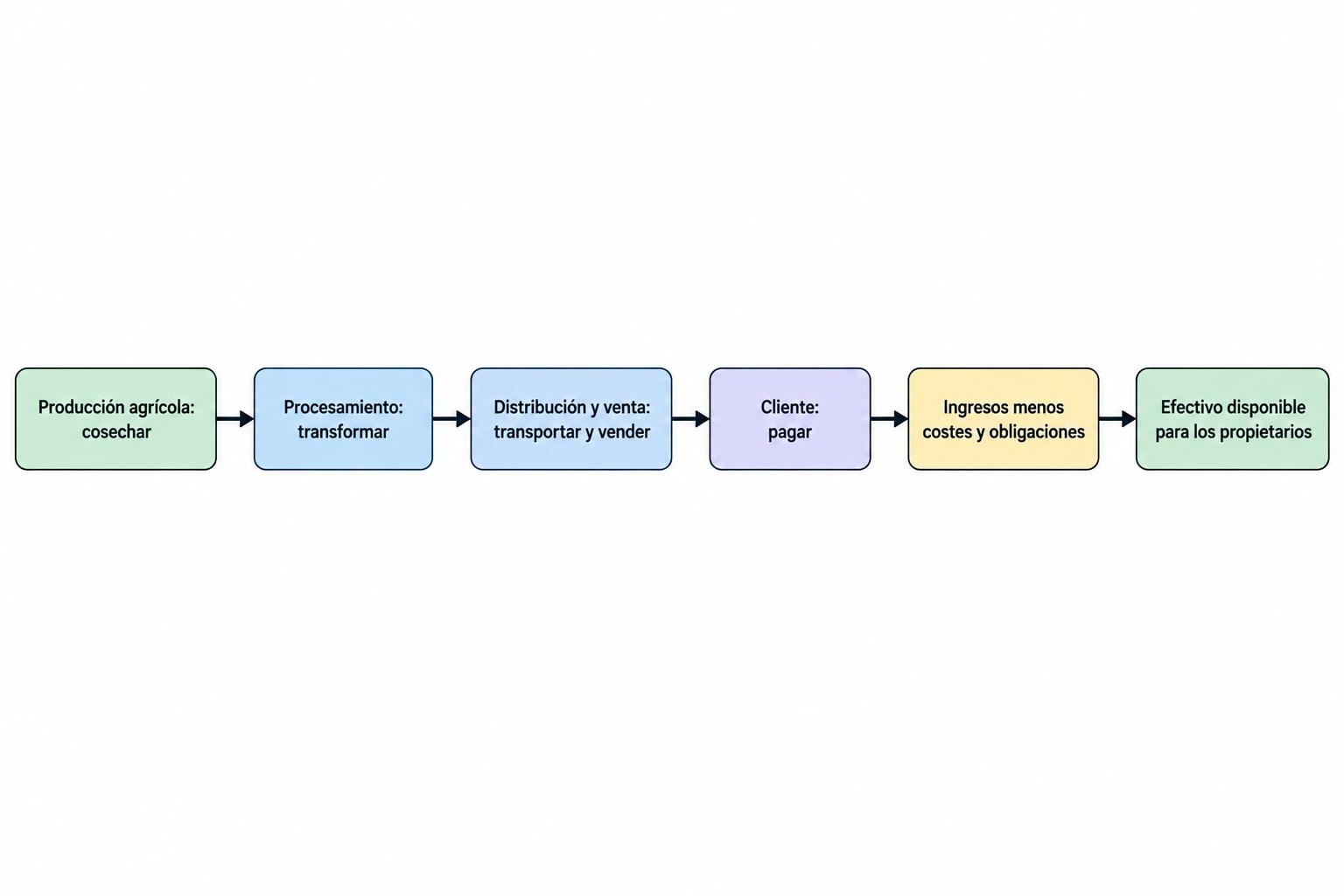
This is where the initial food theme becomes a business analysis. The investor follows the sale through procurement, production, distribution and payment. The stage retaining cash after its obligations, rather than the stage with the most visible product, determines the economic exposure being purchased.
Domestic demand, pricing and profit margins
Food demand offers a recurring revenue base because households need to eat. Spending still changes when purchasing power falls. Consumers can choose cheaper brands, smaller packages, different proteins or more meals prepared at home. Demand for food as a category can remain dependable while revenue and margins at an individual business deteriorate.
The USDA Foreign Agricultural Service’s 2025 report on Türkiye’s food processing industry described a shift towards economy priced and private label products under inflationary pressure. It also reported more cooking at home. For investors, that observation supports examining customer substitution, rather than assuming that every food producer or restaurant benefits equally from recurring consumption.
A discount grocer may attract households reducing expenditure. A premium manufacturer may have to increase promotions or introduce cheaper formats. A restaurant may retain customers but sell fewer extras or receive fewer visits. The investment effect depends on the cost of serving the changed demand, not simply whether a business belongs to the food sector.
Revenue should therefore be separated into units sold, average selling price and product mix. A manufacturer reporting higher sales might have shipped fewer tonnes at higher prices. A retailer’s revenue might rise because prices increased, new stores opened or existing stores gained customers. Those explanations have different implications for future earnings and the capital required to sustain growth.
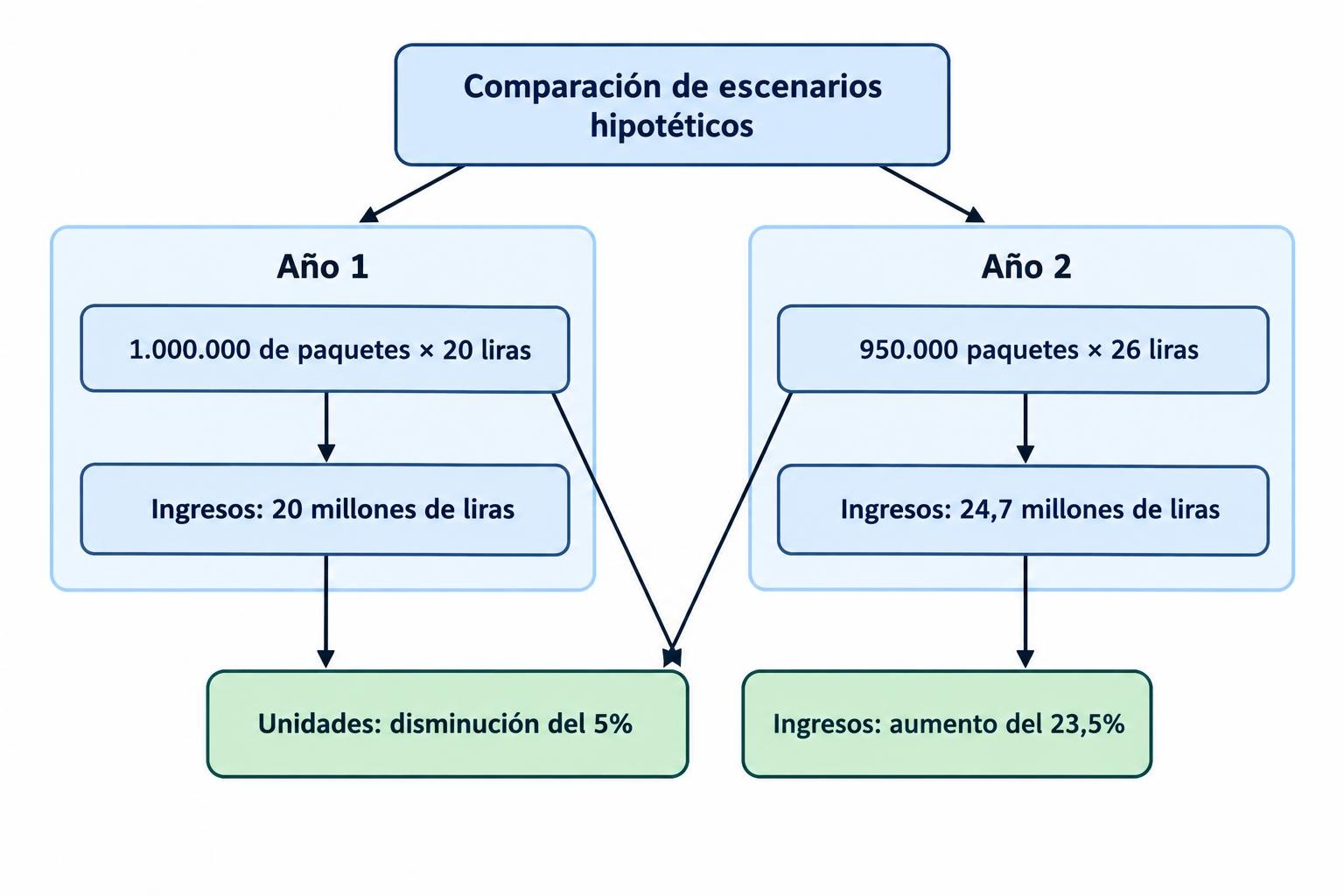
Suppose a producer sells one million packs at 20 lira each, generating 20 million lira of revenue. The following year it sells 950,000 packs at 26 lira, generating 24.7 million lira. Revenue has risen by 23.5%, while volume has fallen by 5%. That result alone does not demonstrate stronger demand or an improvement in the brand’s competitive position.
Pricing power becomes visible when a company can raise prices without losing enough volume or market share to damage profitability. Even then, the timing matters. Ingredient, packaging and wage costs can rise before retailers accept revised prices. A business may eventually recover its margin while experiencing a cash squeeze during the adjustment period.
The economics of dishes make these pressures tangible. A baklava producer has exposure to nuts, butter, sugar and packaging. A döner operator has exposure to meat, bread and labour. The ability to revise prices, manage portions and reduce waste determines how much of a cost increase reaches profit.
The size of the initial margin also matters. A business with revenue of 100 and operating profit of five has little room to absorb an unrecovered increase in costs. If expenses rise by three without a matching revenue increase, operating profit falls to two. A modest change in costs can therefore create a large change in earnings.
Retailer negotiations influence how much of a price rise reaches the manufacturer. Shelf placement, promotional discounts and payment terms can offset an increase in the invoice price. A producer may report a higher gross selling price while retaining less after rebates and support payments. Net revenue and the accompanying accounting notes provide a better basis for assessing the effect.
Restaurants face a similar issue through delivery channels. Delivery can expand demand and use spare kitchen capacity, but commissions, discounts and additional packaging change the contribution per order. Growth in delivered meals is attractive only when the additional revenue covers the costs it creates and does not undermine more profitable sales.
Tourism can add demand for food service and some retail products. That revenue may be seasonal and concentrated in particular locations. An investor evaluating a coastal restaurant supplier needs to distinguish peak season cash generation from the cost of maintaining capacity throughout the year. Annual sales can conceal periods when cash reserves or borrowing support the business.
The strongest demand case is therefore supported by operating evidence. Repeat purchasing, stable volumes, sound margins and cash collection show how a company converts consumer spending into returns. Population size or the popularity of Turkish cuisine supplies context, but neither replaces that evidence.
Exports and the economics of selling Turkish food abroad
Exports give Turkish food businesses access to customers whose spending does not depend solely on domestic incomes. Dried fruit, nuts, confectionery, flour and other processed products can reach overseas wholesalers, manufacturers and consumers. The investment opportunity concerns whether a supplier can fulfil those orders profitably and retain its customers across procurement and currency cycles.
The product’s commercial position matters. An exporter supplying a standard ingredient may compete mainly on quality, availability and price. A business selling a recognised packaged brand can potentially retain more value, but it pays for marketing and distribution. Export revenue alone does not reveal whether the company has bargaining power or simply processes large volumes at a thin margin.
Revenue in dollars or euros can help a company meet costs or debt denominated in those currencies. It does not create an automatic currency hedge. Some ingredients, equipment and packaging inputs may also be imported or priced internationally. The relevant exposure is the balance of receipts and payments, including their timing, rather than the percentage of revenue described as exports.
Suppose an exporter receives one million euros and pays 600,000 euros for internationally priced materials and services. Only the remaining amount is available to meet local costs and other obligations before considering taxes and investment. Assessing all one million euros as a benefit from a weaker lira would overstate the protection offered by the foreign currency receipts.
Depreciation can improve competitiveness where local costs remain comparatively low, but suppliers and employees may demand higher prices as their own costs rise. Foreign buyers can also seek discounts after currency movements. The advantage depends on contracts, competitive alternatives and the speed of cost adjustment. It should be tested through margins, not assumed from an exchange rate chart.
An export business may need substantial working capital. Buying a seasonal crop in advance, holding it through processing and waiting for an overseas customer’s payment can tie up money for months. Larger sales then require more funding. The investor should assess whether the additional gross profit compensates for financing, storage, insurance and the risk of rejected or delayed shipments.
Quality assurance has a direct financial role. Food safety failures, contamination or inconsistent specifications can lead to returns, recalls and the loss of customer contracts. Traceability and dependable processing may support repeat business, but they require spending on testing, facilities and staff. Those costs belong in the normal earnings estimate rather than being treated as optional overhead.
Distribution arrangements determine who owns the overseas customer relationship. A supplier selling through one distributor may face concentration risk even when its products reach many shops. If the distributor controls market access, changes in its purchasing policy can disrupt revenue. A long list of destination countries does not necessarily mean a broad base of independent buyers.
Export contracts need to be read alongside the capacity committed to them. An order requiring dedicated packaging or production equipment can create dependence on the buyer who requested it. If the buyer reduces purchases, the supplier may retain assets and inventory that are difficult to use for another customer.
Food businesses expanding abroad through restaurants face further costs. A concept that works in Türkiye may require different pricing, portions, procurement and operating procedures elsewhere. Rent, labour and customer acquisition are local expenses. The commercial attraction of Turkish cuisine needs to be demonstrated at the restaurant level in the target market.
International exposure can therefore improve a food investment’s revenue balance without removing operating risk. The strongest export case combines repeat orders, dependable quality, manageable funding needs and margins that survive changes in input prices. It also explains how overseas growth benefits the shareholders of the particular company being considered.
Listed companies and investment funds
Publicly traded companies offer a way to invest without directly operating a factory, shop or restaurant. Borsa Istanbul includes food producers, retailers and food service businesses. A share represents ownership in the listed legal entity, with returns arising from dividends and changes in its market value. The exposure depends on that entity’s consolidated operations and financial obligations.
Manufacturers and consumer brands
Ülker Bisküvi provides an example of listed exposure to packaged snacks. Yıldız Holding’s announcement of its 2025 results reported revenue of 112 billion lira and an EBITDA margin of 16.5%. Those figures describe the company’s reported performance for that year. They do not establish whether its shares are attractively valued at a later purchase price.
For an investor assessing such a manufacturer, the questions concern volumes, brand strength, input costs and cash conversion. EBITDA measures earnings before interest, tax, depreciation and amortisation. It does not deduct the cash required for factory investment or settle financing obligations. A strong EBITDA margin therefore needs to be considered alongside debt, capital expenditure and working capital.
The boundaries of the investment also matter. Ülker Bisküvi belongs to a wider ownership structure, but buying the listed company is not equivalent to buying every food brand or business associated with its corporate owners. Annual reports identify subsidiaries, related party transactions and the operations included in the financial results. Familiar group names can otherwise create an inaccurate impression of the assets being acquired.
Public listing improves access to information without eliminating governance risk. Controlling shareholders can influence financing, acquisitions and distributions. Related party transactions deserve attention because buying and selling within a corporate group can shift the benefit between entities. Minority investors need to assess the interests of the company whose shares they own.
Retailers and restaurant operators
BİM offers a different model through discount retailing. Its operating concept emphasises a restricted assortment and cost discipline. An investment case built around that model would examine purchasing efficiency, store productivity, inventory turnover and the ability to retain customers on price. The retailer’s economics differ from those of manufacturers supplying its shelves.
Migros provides another form of grocery exposure. In its published review of 2025 performance, it reported consolidated revenue of 412.8 billion lira and an EBITDA margin of 6.6% under IAS 29 inflation accounting. Comparing that margin directly with a snack manufacturer’s margin would overlook differences in the business model, accounting definitions and capital employed.
The investment analysis for a retailer should connect new stores and online sales to incremental profit and cash. Opening additional outlets creates revenue while requiring premises, equipment, inventory and operating staff. Online sales can improve convenience and customer retention, but the cost of picking and delivery must be recovered from the orders served.
TAB Gıda illustrates listed exposure to restaurant operations. Its portfolio includes international restaurant brands alongside Usta Dönerci and Usta Pideci. It therefore offers a broader restaurant business than a pure investment in traditional Turkish cuisine. Franchise agreements, restaurant performance and procurement arrangements are central to assessing the resulting cash flows.
Funds and indirect exposure
A Türkiye equity fund can simplify access and spread exposure across companies. The iShares MSCI Turkey UCITS ETF is an example of a fund tracking Turkish equities. Its mandate covers a national share market rather than only food businesses. An investor needs to inspect the holdings to establish how much of the investment actually serves the intended food thesis.
A broader emerging market or consumer fund can dilute that connection further. Banks, industrial companies and other holdings may drive most of its return. Diversification reduces dependence on an individual food company, but it also means that growth in Turkish food consumption may have little effect on the fund’s performance.
General investing resources such as Investing.co.uk can help readers compare the mechanics of shares, funds and other products. The selection still requires matching the instrument’s actual holdings or ownership rights to the desired business exposure. A convenient product is useful only when its contents support the investment being considered.
Private businesses, restaurants and franchises
Many Turkish food opportunities are privately owned. An investor could finance a processor, acquire a grocery wholesaler, take a stake in an exporter or operate a restaurant franchise. These routes can provide more direct exposure to a chosen product or market, but they require a different assessment from purchasing a listed share.
For a private operating business, reliable records come first. Bank receipts, supplier invoices, payroll and inventory records should support the reported accounts. Cash sales, informal arrangements and owner provided services can make historic earnings difficult to interpret. The buyer needs to establish what the business would earn after paying normal commercial costs for all the resources it uses.
An owner working full time without a market salary can make a restaurant appear more profitable than it would be for an outside investor. Related party rent or unusually cheap supplier credit can have the same effect. Normalising those arrangements produces a more realistic estimate of earnings and prevents the buyer from paying for benefits that may disappear after the transaction.
Restaurant analysis then moves to the individual location. Average spending, orders per day, ingredient costs, labour, occupancy costs and waste determine its contribution. The resulting cash must also cover equipment maintenance, refurbishments and taxes. A busy dining room provides evidence of demand, but it does not establish the return on the capital invested in fitting out the premises.
A franchise adds a contractual relationship. The investor must identify initial fees, continuing royalties, advertising contributions, required suppliers and renovation obligations. The agreement also determines territory rights, renewal conditions and the circumstances in which the brand owner can terminate the arrangement. Brand recognition has financial value only after the contract’s costs and restrictions are reflected in the forecast.
Figures supplied for established restaurants need to be distinguished from the expected performance of a new location. A new unit may take time to develop demand while paying rent and wages from the start. Financing plans need to cover that period. Assuming immediate mature sales can leave a viable concept without enough cash to reach its intended operating level.
Private export or processing businesses require similar scrutiny of customers and procurement. One large contract can make historic results look dependable while leaving the company exposed to a single buyer. A factory with unused capacity may offer growth potential, but the additional orders, funding and operating capability needed to use it have to be demonstrated.
Maintenance spending and growth spending should be distinguished when interpreting expansion. Replacing worn equipment protects existing earnings; adding a production line aims to create new earnings. Both require cash. A forecast that treats all investment spending as optional can overstate what owners can withdraw without damaging the business.
Exit terms matter throughout. A private stake may have no ready buyer, and a minority shareholder may have little control over dividends or a sale. Information rights, governance and agreed transfer arrangements affect its financial value. A promising Turkish food business can still be a poor investment if the owner cannot receive cash or realise the stake on acceptable terms.
Currency, inflation accounting and valuation
A food company can improve its operations while delivering a disappointing return to a foreign investor. The difference may arise from the lira, the purchase price or the distribution of cash. Assessing the business and assessing the security are connected tasks, but growth in the first does not guarantee a favourable outcome in the second.
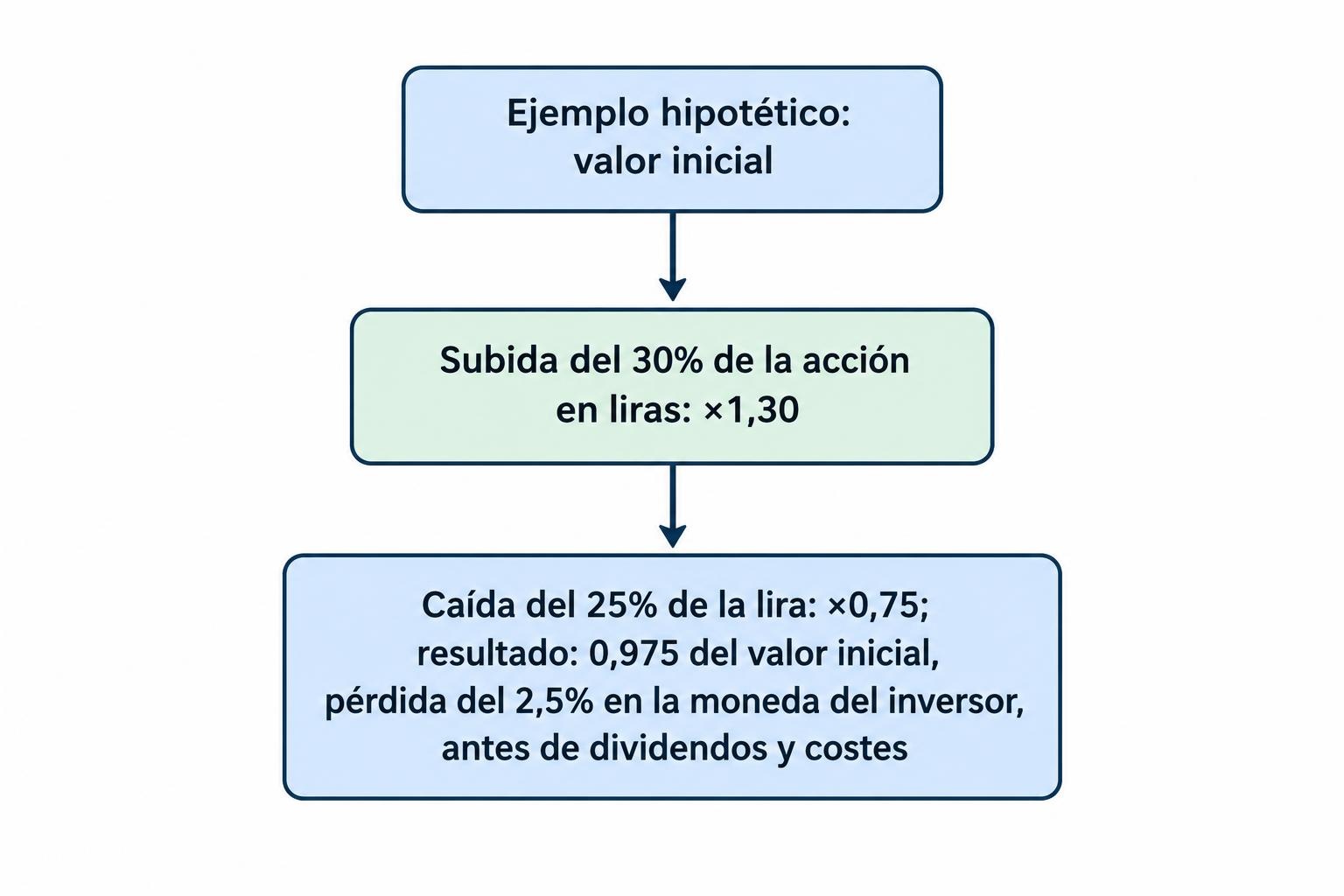
Currency translation provides a simple example. Suppose a share rises by 30% in lira terms while one lira falls by 25% against the investor’s home currency. Before dividends and costs, the translated value becomes 1.30 multiplied by 0.75, or 0.975 of the original investment. The investor has lost 2.5% in home currency terms despite the local share price increase.
The currency used to trade an investment does not necessarily determine its underlying exposure. A fund bought in pounds or dollars may still own Turkish shares whose value is affected by the lira. Hedging arrangements, where present, need to be assessed separately. A foreign currency trading line does not itself remove the economic effect of exchange rate movements.
Business currency exposure also needs to be traced through the balance sheet. Foreign currency borrowing can become harder to service when local receipts buy fewer dollars or euros. Export receipts may offset some of that risk, depending on their amount and timing. Gross export sales do not establish that the company has enough net foreign currency cash to meet every obligation.
Inflation complicates comparisons within the financial statements. A rise in nominal lira revenue can reflect prices rather than more products sold. Under IAS 29, applicable financial statements and comparative figures are restated into the purchasing power of the currency at the reporting date. The financial report should state the accounting basis and price index used.
The standard also requires a separately disclosed gain or loss on the net monetary position. That accounting item can affect reported profit without representing an equivalent new cash receipt from selling food. Investors need to distinguish operating performance, financing, restatement effects and actual cash generation. Otherwise, an earnings multiple can be applied to a profit figure that is poorly understood.
Comparative figures need to be taken from a consistent reporting basis. Mixing an earlier nominal result with a later inflation adjusted result can create a misleading growth rate. Management presentations may also show alternative performance measures. Reconciliations to the accounts help establish what has been adjusted and whether the comparison describes a genuine change in operations.
Valuation then connects expected cash flows to the price of the investment. A price to earnings ratio is useful only when earnings are representative and the company’s financing and accounting effects are understood. An enterprise value to EBITDA ratio can help compare operations, but it leaves out taxes, capital expenditure and working capital. Neither ratio supplies a complete investment case by itself.
Food businesses with different capital requirements should not be assigned the same valuation simply because they sell to similar customers. A manufacturer may need major factory expenditure. A restaurant chain may have substantial leases and refurbishment commitments. A distributor may require less fixed investment while committing more money to inventory and receivables. These obligations determine how much operating profit becomes distributable cash.
Return on invested capital adds another test. If a new factory earns an extra two million lira of annual operating profit on twenty million lira committed, its initial operating return is 10% before considering taxes and adjustments. The investor must judge whether that return compensates for financing, execution and business risk.
Debt and leases need consistent treatment when comparing companies. A valuation using earnings before certain lease expenses should reflect the corresponding obligations in the measure of enterprise value. Different presentations can otherwise make one operator appear cheaper than another. The same principle applies when assessing a private business against quoted company multiples.
The forecast should also test less favourable conditions. Lower volumes, slower price increases, higher ingredient costs or delayed customer payments can reduce cash generation. A business that can fund operations and essential investment through those conditions offers a different financial proposition from one that repeatedly needs new borrowing or shareholder contributions.
Selecting and accessing an investment
The investor can now return to the original commercial idea with a clearer definition of the exposure. A thesis about cheaper household shopping points towards different businesses from a thesis about premium packaged exports or restaurant expansion. The investment should benefit from the demand change being proposed, rather than share only a Turkish name or food industry classification.
The next step is to identify the mechanism producing a return. A retailer might increase profit through higher productivity at existing stores. A manufacturer might retain customers while improving its product mix. An exporter might convert repeat foreign orders into cash without excessive funding needs. Each thesis should connect an observable operating change to earnings and then to the value available to shareholders.
It should also explain why the purchase price is reasonable. An attractive business can already be valued for strong expansion and stable margins. If the market expects more than the investor’s forecast supports, the investment may disappoint even when the company performs well. Forecasting demand and assessing expectations belong in the same analysis.
Portfolio exposure needs consistent discipline. Several food companies may depend on the same households, lenders and currency. Owning different brands does not necessarily diversify those common risks. Position size should reflect the combined exposure and the potential loss under adverse conditions, alongside the expected return.
For listed investments, access depends on the broker, instrument and investor’s account. Borsa Istanbul’s investor guidance describes routes through authorised local investment firms or intermediaries with access to its markets. A platform offering Turkish currency trading does not necessarily offer Turkish shares. A platform displaying a food company may offer a derivative rather than ownership of its stock.
When selecting a broker to invest through, resources such as BrokerListings.com can form part of the search. The investor still needs to confirm that the chosen firm supports the exact shares or funds required, accepts clients from the investor’s country and provides the intended form of ownership. Commissions, currency conversion, custody and dividend handling affect the amount retained.
Execution deserves attention even for a longer holding period. A less actively traded share can have a wider spread or insufficient quantity at its displayed price. Trading material at DayTrading.com can help explain order types and execution mechanics. The relevant application here is obtaining the intended investment at a controlled cost, with the company’s business prospects providing the reason for ownership.
A derivative creates a different arrangement. A contract for difference gives exposure to price changes under the provider’s terms, rather than ordinary share ownership. Margin requirements and ongoing financing can affect the result. An investment forecast based on holding a food business for several years should reflect the costs and risks of the actual instrument used.
The final assessment connects product demand, operating returns, financial obligations and the purchase price. Turkish food can support investments in brands, processing, retail, restaurants and distribution. The opportunity becomes investable when the chosen business converts that demand into cash and the investor has an appropriate claim on it at a price that allows for the risks being taken.